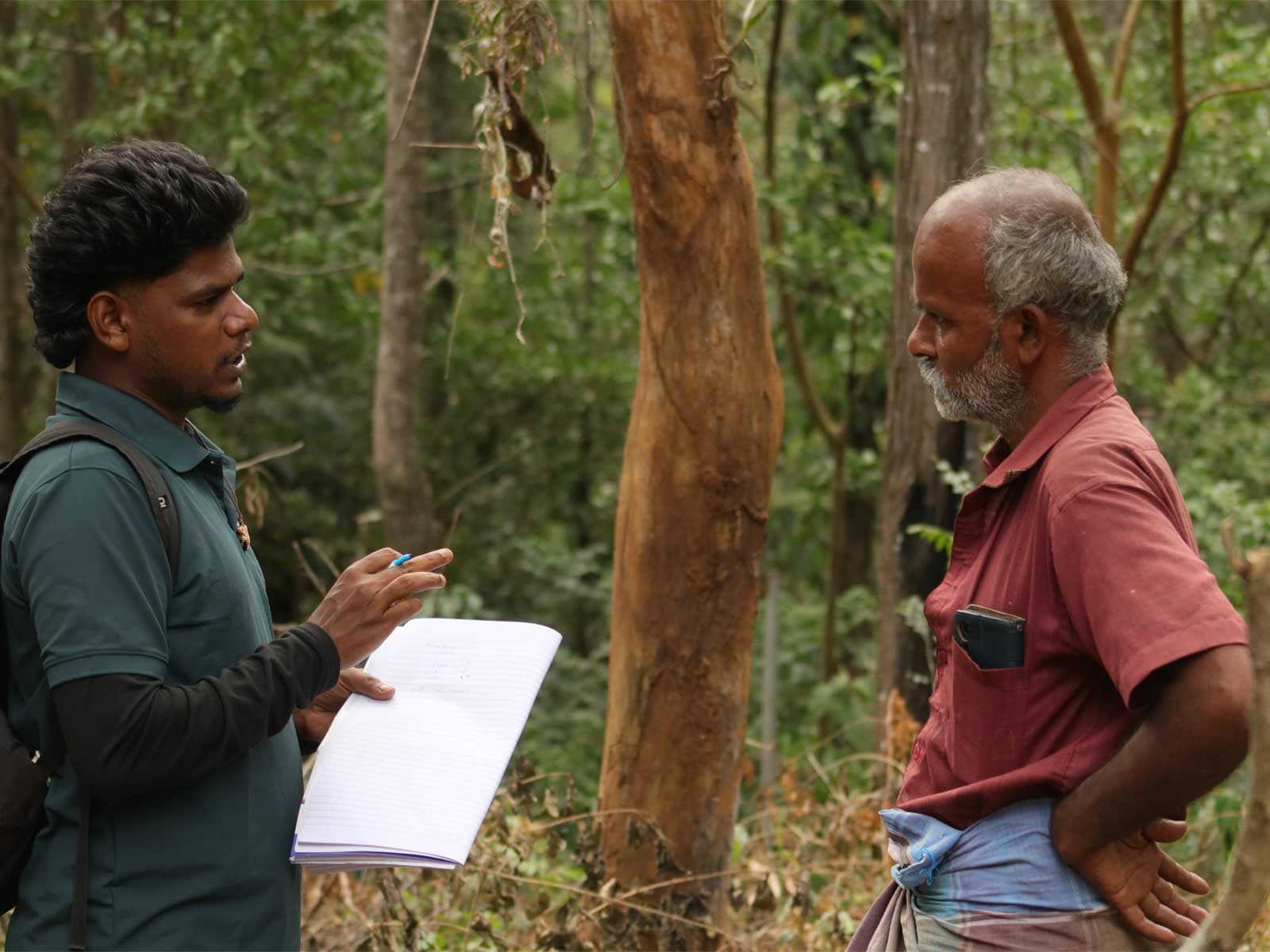
A scientific approach towards regeneration of the forest has always been the priority of the management. So a series of studies were done over a period of years to assess the condition of the forest as well as to decide on the future course of the action.
- 2001 , Comprehensive Inventory of the Fauna and Flora of Khandige Estate by Abi Tamim Vanak, Atree
- 2022 , Study of the Butterflies in Khandige Wildlife Preservation , Vinod, S., and V. Paulmathi, Kanyakumari Nature Foundation.
- 2022 , Report on Water Conservation , ASHOK KUMAR R. M.Sc., M.Phil., M.S., Consultant Geologist, Retired Assistant Geophysicist (Special Grade) PWD
- 2022 , Study of Moths in Khandige Wildlife Preservation , Thalavai Pandi, S., Atree
- 2022 , Assessment of Invertebrate Diversity in Khandige Wildlife Preservation , Anubhav Agarwal
- 2023 , Survey of Vegetation in Khandige Wildlife Preservation , Dr. Ganesh Babu, Centre for Conservation of Natural Resources.
- 2024 and 2025, Ecological Survey at Khandige Estate. , Dr. Ayyapan , Dr. Dorris & team , French Institute of Pondicherry
- First photographic record of the Dhole Cuon alpinus (Mammalia: Carnivora: Canidae) from the Sirumalai Hills in Tamil Nadu, India B.M. Krishnakumar & M. Eric Ramanujam
Ongoing Projects
PRODERE (PROmises and DElusions of private Ecosystem REstoration in India)
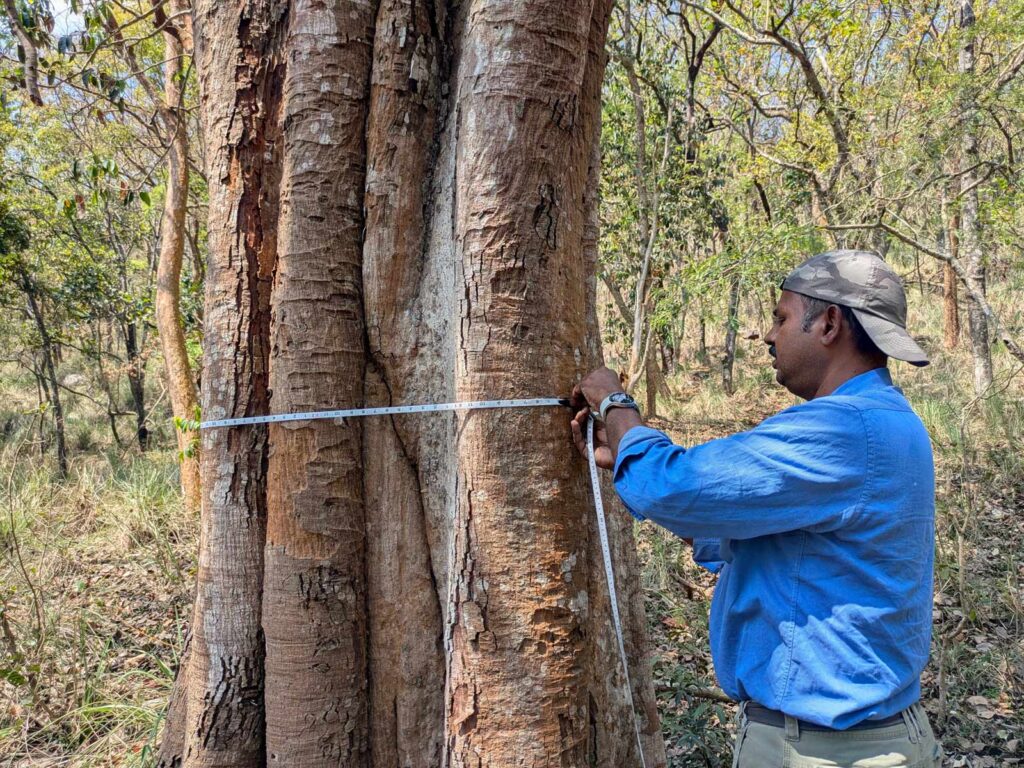
This is a 4-year transdisciplinary project coordinated by the Institut de Recherche pour le Développement (IRD) alongside the French Institute of Pondicherry (IFP) and PALOC. This involves evaluating private-sector ecological restoration across South India’s dry tropical forests.
- Core Goal: Determine if private restoration projects create ecologically resilient, socially inclusive environments capable of adapting to 2050 climate and socio-economic shifts.
- Key Focus Areas: Explores private governance, legal frameworks, and emerging market mechanisms like biodiversity credits and CSR initiatives.
- Methods: Integrates socio-ethnographic fieldwork, ecological surveys (botanical metrics and spider “bioblitzes”), and satellite-based geospatial modeling (TerrSet) to map land-use scenarios.
Population & distribution study of Grizzled giant squirrel in Khandige Wildlife Preserve & Sirumalai reserve forests
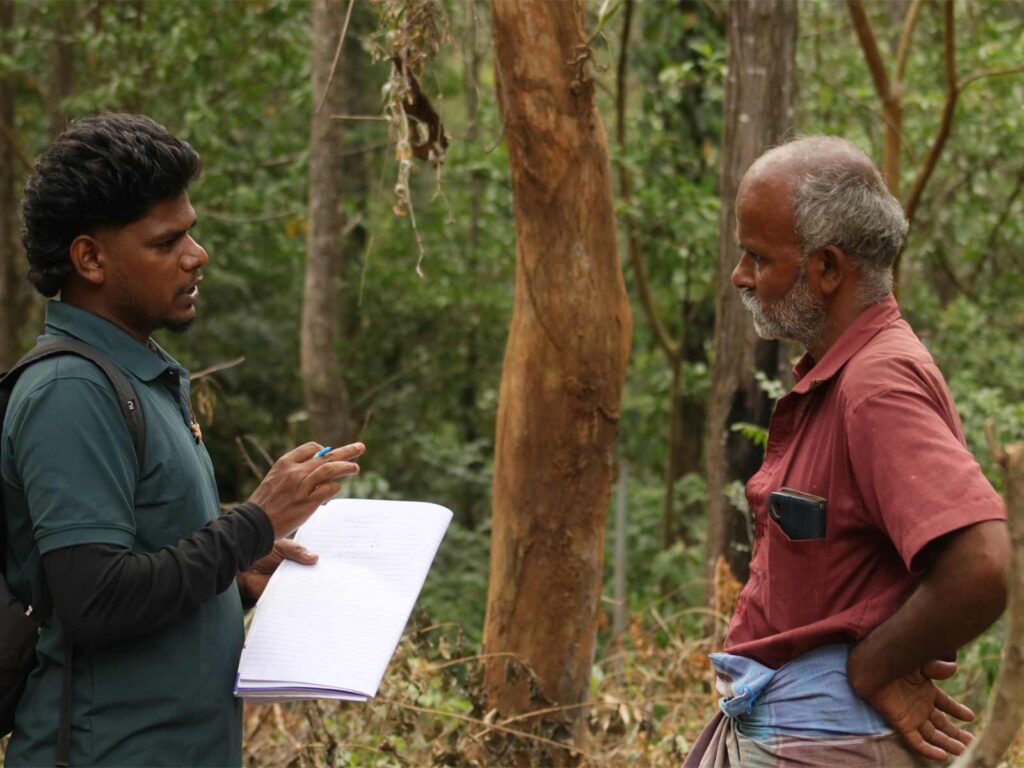
•Habitat assessment •Outreach activities •Drey monitoring •Threat assessment •Data analysis •Camera trap installation and checking
•Preliminary findings are that they are found in higher elevations of above 1000 m. In SMTR they are not found above 600 m elevation. They were also found foraging on the ground.